Beef AF: Italian Beef Chicago Style



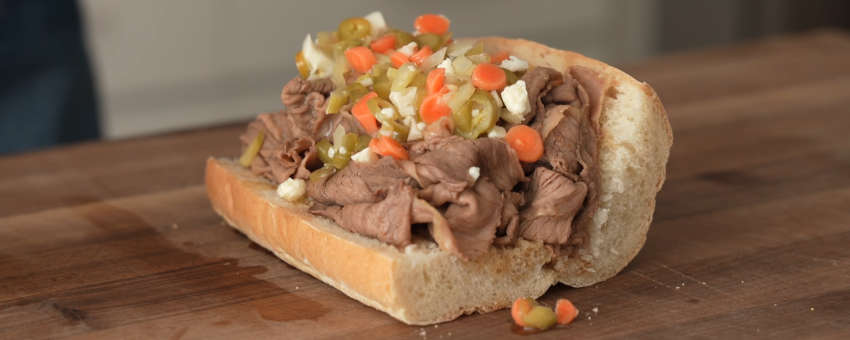
Chicago-style Italian beef emerged directly out of working-class immigrant culture in Chicago during the early 20th century. The sandwich originated as a creative solution born of economic necessity and community celebration, eventually becoming one of the city’s most cherished culinary staples.
Origin and Cultural History
- The Early Beginnings (Post-WWI): The origin of the sandwich traces back to the aftermath of World War I with an Italian-American street peddler named Anthony Ferrari. Ferrari cooked food in his basement, loaded it onto a truck, and sold lunches to blue-collar workers across Chicago.
- “Peanut Weddings” and Feeding Crowds: Italian immigrants in Chicago frequently hosted budget-friendly gatherings—such as weddings, birthdays, and funerals—held in church basements, commonly referred to as “peanut weddings” because peanuts were often the only snacks offered. To feed large crowds on tight budgets, hosts purchased cheap, tough cuts of beef.
- The Invention of the Sandwich: Ferrari observed that roasting these inexpensive cuts, braising them in heavily spiced herbal broth, and slicing the meat paper-thin allowed a single roast to feed twice as many people. Tucking the thin, broth-soaked ribbons of beef into sturdy French bread created a hearty, flavorful, and affordable meal.
Iconic Leaders and Historic Shops
As the sandwich gained popularity, local entrepreneurs transitioned from street carts to brick-and-mortar beef stands, shaping Chicago’s sandwich landscape:
- Al’s No. 1 Italian Beef (Little Italy):
- The Pioneer: Anthony Ferrari’s son, Al Ferrari, opened a brick-and-mortar beef stand in Little Italy in 1938 (originally operating under the front of a bookie operation during the Depression era).
- The Legacy: Al’s relocated to its legendary Taylor Street location in the 1960s. It is widely recognized as the originator of the classic commercial Italian beef sandwich and popularized the famous “Italian stance” posture used to eat messy, wet-dipped sandwiches without ruining clothing.
- Johnnie’s Beef (Elmwood Park):
- Founded in 1961 by Johnnie Arto, Johnnie’s became famous for its strictly guarded secret spice recipe (kept under lock and key by family members) and long lines extending down the block.
- Mr. Beef (River North):
- Founded in 1979 by Joe Zucchero on Orleans Street, Mr. Beef became a cultural icon in River North. It directly inspired the hit television series The Bear (created by Christopher Storer, a childhood friend of the Zucchero family).
- Portillo’s & Buona Beef:
- Portillo’s grew from a small trailer operation into a massive, highly consistent regional and national chain that introduced Chicago Italian beef to audiences far beyond Illinois.
- Buona Beef, established by the Buonavolto family, became another leading Chicago area staple, providing widespread access across the Chicagoland region.
Shops Still Operating Today
Several of Chicago’s most historic and influential Italian beef joints remain in operation today:
- Al’s No. 1 Italian Beef: The flagship shop on Taylor Street in Little Italy continues to serve its signature heavily spiced beef and jus.
- Mr. Beef on Orleans: Still operating at its original River North location, the shop is currently run by Joe Zucchero’s son, Chris Zucchero, and remains a major destination for locals and visitors.
- Johnnie’s Beef: Operating in Elmwood Park, Johnnie’s continues its tradition of fast-paced counter service, custom Turano French rolls, and charcoal-grilled combo options.
- Portillo’s & Buona Beef: Both continue to operate dozens of locations across Chicagoland and nationally.
Crafting an authentic Chicago-style Italian beef sandwich at home requires coordinating three distinct culinary elements: the slow-cooked, paper-thin beef and its fortified jus, the tangy pickled giardiniera, and a custom high-gluten French roll. Because each component requires proper curing, baking, or chilling lead times, mastering the timeline is just as important as the recipe itself.
1. Preparing the Beef & Fortified Ju (Half-Day Prep + Overnight Lead Time)
The meat component requires two critical phases: braising in an intensely seasoned broth to create the signature au jus (or “gravy”), followed by thorough chilling so the meat can be shaved tissue-thin.
- Selecting the Cut: Traditional beef stands use lean back-end cuts such as top round, bottom round, eye of round, or sirloin roast because they slice cleanly without shredding. Chuck roast is also widely popular for home cooks because its higher intramuscular fat yields extra flavor.
- The Italian Spice Blend: The beef is heavily seasoned with a blend featuring crushed fennel seed, toasted coriander, dried oregano, basil, thyme, granulated garlic, onion powder, paprika, black pepper, kosher salt, and red pepper flakes.
- Browning & Broth Building: The roast is aggressively seared in a hot Dutch oven to develop a rich, caramelized fond on all sides. The pot is then deglazed and filled with a broth base made from beef stock, water, roasted marrow/neck bones or beef shanks, smashed garlic heads, onions, celery, bell peppers, herbs, and tomato paste.
- Immersion Braising: The beef cooks partially or fully submerged in this spicy broth covered at low heat (250°F–375°F) for 2 to 3.5 hours until cooked through.
- Retaining the Juices: Once braised, the liquid is passed through a fine-mesh strainer to remove garlic hulls and whole herbs, yielding a glossy, highly concentrated au jus that serves as the flavor engine for the entire sandwich.
- Chilling & Paper-Thin Slicing: Hot beef cannot be sliced thinly without crumbling. The roast must be wrapped and chilled overnight in the refrigerator to firm up the fat and muscle fibers. The next day, it is shaved tissue-paper thin against the grain using a deli slicer, mandoline, or long sharp knife.
2. Preparing the Giardiniera (Minimum 2-Day Lead Time)
Giardiniera is the spicy, crunchy pickled vegetable condiment that cuts through the heavy fat and salt of the beef. It cannot be made last-minute because the vegetables need time to pickle in vinegar before being packed in oil.
- Vegetable Mix: A blend of finely chopped cauliflower, carrots, celery, green bell peppers, white/yellow onions, serrano or jalapeño peppers, and crushed garlic.
- Salt & Vinegar Pickling (Day 1 to Day 2): The chopped vegetables are soaked or simmered in a hot brine of distilled white vinegar, water, kosher salt, dried oregano, thyme, celery seed, red pepper flakes, and bay leaves. They sit in the refrigerator for at least 24 to 48 hours to acidify, soften slightly, and absorb the spices.
- Oil Packing (Day 2 Onward): After pickling, the sour brine is drained off and the vegetables are submerged in neutral oil or olive oil (often with sliced green olives). The oil mellows the harsh vinegar acidity while preserving the crunch and carrying the spicy flavor across the sandwich.
3. Preparing the Bread (1-Day Lead Time)
An authentic Chicago Italian beef requires a specific style of French bread/hoagie roll—one with a thin, tender crust and a dense, chewy crumb backed by high gluten development.
- Dough & Gluten Structure: Made with high-protein bread flour, warm water, yeast, olive oil, sugar, and salt, the dough is kneaded vigorously to build a strong gluten network. Soft, brittle store-bought hot dog buns or rustic open-crumb artisanal sourdough will fail under the weight of wet meat.
- 1-Day Lead Time: Baking the rolls one day before serving (and wrapping them tightly in plastic overnight once cooled) allows the crust to soften slightly while maintaining its structural toughness. Freshly baked bread with a brittle crust will shatter or turn to mush when submerged in hot broth.
- Juice Saturation & Dipping: Before or after layering the beef and giardiniera, hot beef jus is ladled liberally over the open roll, or the entire assembled sandwich is dipped directly into the pot of hot jus (“wet” or “dipped” style). The sturdy 1-day-old roll absorbs the liquid like a sponge while holding the sandwich together.
Master Workflow & Timeline Management
To ensure every element reaches peak flavor and texture simultaneously on serving day, follow this 3-day production schedule:
T-48 Hours (Day 1)      ---> Chop & Brine Giardiniera Vegetables (Vinegar & Salt)
                             [Optional: Mix Bread Poolish/Preferment]

T-24 Hours (Day 2 Morning) -> Mix, Bake, & Cool French Bread (Wrap Tightly Overnight)

T-24 Hours (Day 2 Afternoon) -> Sear & Braise Beef in Spiced Stock; Strain Jus
                             -> Drain Giardiniera Brine & Submerge Vegetables in Oil
                             -> Refrigerate Cooked Beef Roast Overnight to Firm Up

T-0 Hours (Serving Day) ---> Shave Cold Beef Paper-Thin
                             -> Reheat Strained Jus & Gently Warm Sliced Beef in Broth
                             -> Slice Bread, Load Beef & Giardiniera, Dip in Jus, & Serve
Day 1 (T-48 Hours / 2 Days Before Serving)
- Chop & Brine the Giardiniera: Dice cauliflower, carrots, celery, peppers, and garlic. Submerge them in the boiling vinegar, salt, and spice brine. Seal and place in the refrigerator to pickle for 24–48 hours.
- (Optional) If using a bread preferment (poolish), mix flour, water, and yeast to let ferment overnight.
Day 2 (T-24 Hours / 1 Day Before Serving)
- Bake the Bread (Morning): Mix the bread dough, knead for high gluten development, proof, shape into long rolls, score, and bake at 375°F. Allow rolls to cool completely, then wrap tightly in plastic or foil to rest overnight.
- Finish the Giardiniera (Afternoon): Drain the vinegar brine from the pickled vegetables, transfer them to jars, and submerge completely in oil.
- Braise & Chill the Beef (Late Afternoon): Season and sear the beef roast. Simmer in the spiced broth for 2–3 hours. Strain the cooking liquid to yield a clean au jus. Wrap the warm roast in plastic wrap and place it alongside the jus in the refrigerator to chill overnight.
Day 3 (Serving Day / Assembly)
- Shave the Beef: Take the cold, firm beef roast out of the fridge and shave it against the grain as thin as possible using a mandoline or deli slicer.
- Warm the Meat & Jus: Reheat the strained au jus on the stovetop to a gentle simmer (~140°F–150°F). Drop the shaved ribbons of cold beef into the hot jus for 15–30 seconds to warm through and absorb flavor.
- Build & Dip: Slice open a French roll with a hinged cut. Use tongs to pile warm, dripping beef into the roll. Top with oil-packed giardiniera (and roasted sweet peppers if desired).
- The Final Dip: Ladle extra hot jus over the top or submerge the entire sandwich directly into the pot of au jus. Wrap tightly in parchment or wax paper for 1–2 minutes to allow the steam and juices to meld before eating.
© 2026 Beef AF, All Rights Reserved.
Written and curated by Chef William Jackson
Contact, Privacy Policy and Disclosures, XML Sitemap.