Beef AF: The Smash Burger Origin Story



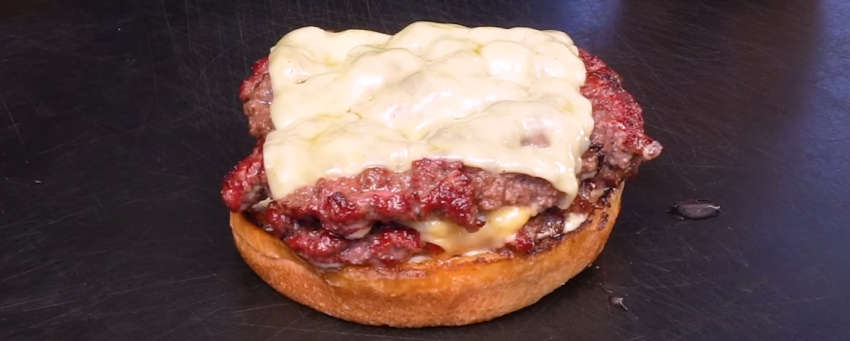
The Smash Burger originated from the Oklahoma onion burger, during the 1920s. Hamburgers were a popular and inexpensive food, taking various forms in the different regions of the USA. There was a popular style of burger cooking in the Midwestern states, and a different style in the west, for example. In some places, there were square burgers on square bread, while other places favored round burgers on round buns. Depending on where you were, maybe diners offered pickles as a side dish, and maybe mustard as a condiment.
In the 1920s, there was no national concept of a “hamburger” as there is today. But change was coming…
The Great Railroad Strike of 1922 (also known as the Railway Shopmen’s Strike) was a massive, nationwide work stoppage in the United States that began on July 1, 1922, and lasted until early September 1922. It involved approximately 400,000 skilled railroad shopmen and maintenance-of-way workers. They walked off the job to protest a 12 percent wage cut imposed by the federal Railroad Labor Board, which they viewed as an unfair reversal of wartime gains as the industry returned to private control.
The strike was ultimately crushed by a sweeping federal injunction issued by Judge James Herbert Wilkerson and enforced by Attorney General Harry M. Daugherty, who prohibited picketing, publicizing grievances, and union leadership involvement under the Sherman Antitrust Act. The defeat resulted in the permanent replacement of many strikers, widespread blacklisting, and a significant decline in union power during the 1920s, though it eventually led to the passage of the Railway Labor Act of 1926, which established formal collective bargaining mechanisms.
During the Great Railroad Strike , many working-class railroad workers in El Reno, Oklahoma, were out of work and facing economic hardship. Beef was expensive, but onions were cheap, flavorful, and abundant. A local burger stand owner named Ross Davis, at the Hamburger Inn, along with Homer Davis, had an idea to make flavorful burgers in an efficient manner. They began pressing paper-thin sliced onions directly into small balls of ground beef on a flat-top griddle, allowing them to cook together. By stretching the meat with up to a 50/50 beef-to-onion ratio, he could serve a substantial, affordable meal to hungry locals.
The idea was a hit. People loved the new style of burger and its affordable pricing. Other shops learned of the new onion burger and began to replicate it. The idea spread.
What started as a cost-saving measure accidentally created a culinary masterclass in flavor and texture. The technique used for cooking smash burgers is simple and straightforward:
- The Smash: A ball of ground beef is placed on a hot griddle, topped with a heavy mound of paper-thin shaved sweet or yellow onions, and forcefully smashed down with a heavy spatula to embed the onions directly into the meat.
- Triple-Texture Onions: Once seared on the meat side, the patty is flipped so the onions cook underneath, directly in the rendered beef fat. This creates three distinct onion profiles at once: deeply caramelized onions at the center bottom, crispy/charred frizzled bits around the edges, and soft, steamed onions right against the beef.
- The Onion Steam: The top and bottom buns are placed directly over the cooking patty and melted cheese, trapping the rising onion steam to warm and soften the bread while infusing it with savory flavor.
The traditional Oklahoma onion burger is served simply with yellow mustard and dill pickles (and later American cheese). Purists, such as burger expert and restauranteur George Motz, eschew popular modern condiments like barbecue sauce and ketchup. If you want an authentic Oklahoma onion burger, just have it with pickles and yellow mustard. That is how people knew it as more and more burger shops added it to their menus in the 1920s and later.
Popularity of the Oklahoma onion burger, which became colloquially known as the smash burger, expanded rapidly during the Great Depression of the 1930s. As unemployment soared and beef became scarce, the onion burger earned a reputation as the ultimate “recession burger”. Walk-up stands across El Reno adopted the technique because it allowed cooks to serve substantial, flavor-packed meals for just 5 cents. During this decade, El Reno established itself as the unquestioned capital of fried onion burgers, giving birth to long-standing local stands that carried on the technique. During the Great Depression, countless burger stands throughout the USA replicated the wisdom of Ross and Homer Davis.
By the 1940s and 1950s, the onion burger had spread from El Reno into Oklahoma City and across the state, becoming a staple of Oklahoma’s roadside diner heritage. The post-World War II expansion of car culture and highway travel along Route 66 (which runs directly through El Reno) introduced thousands of cross-country travelers to Oklahoma’s distinct fried-onion style. Historic walk-up counters and diners in El Reno—such as Robert’s Grill and Johnnie’s Grill—became local institutions dedicated to preserving the 1920s pressing method. Originally, 1920s onion burgers contained no cheese—just beef, onions, mustard, and dill pickles.
Cheeseburgers were not really a thing until the 1950s. Processed American cheese became a standard fast-food ingredient post WW2, as younger generations began melting slices over the steaming onions and meat, establishing the modern double-cheeseburger version popular today. By the end of the 1950s, what started as a 5-cent cost-cutting trick in a small railroad town had transformed into one of Oklahoma’s most iconic and enduring culinary traditions.
The cooking technique of the smash has been used for all sorts of burger concepts. There are smash jalapeno burgers, smash bacon cheese burgers, smash chili and guacamole burgers, for example. People are adopting the smash in new ways every day. Over a century later, what began at a tiny walk-up stand in El Reno remains a celebrated regional icon, kept alive by historic Oklahoma spots like Sid’s Diner, Johnnie’s Grill, and Robert’s Grill. Across the United States, people stand by their grilles and griddles, a hundred years after the first smash burger, still cooking them and still enjoying the mix of onions, beef, cheese, and seasonings.
I quit cooking the popular thick burgers long ago, opting to make my own paper-thin versions of burgers, using onions, bell peppers, and cheese. If you want to more deeply explore where the classic burgers come from, watch George Motz’s documentary - Hamburger America
© 2026 Beef AF, All Rights Reserved.
Written and curated by Chef William Jackson
Contact, Privacy Policy and Disclosures, XML Sitemap.